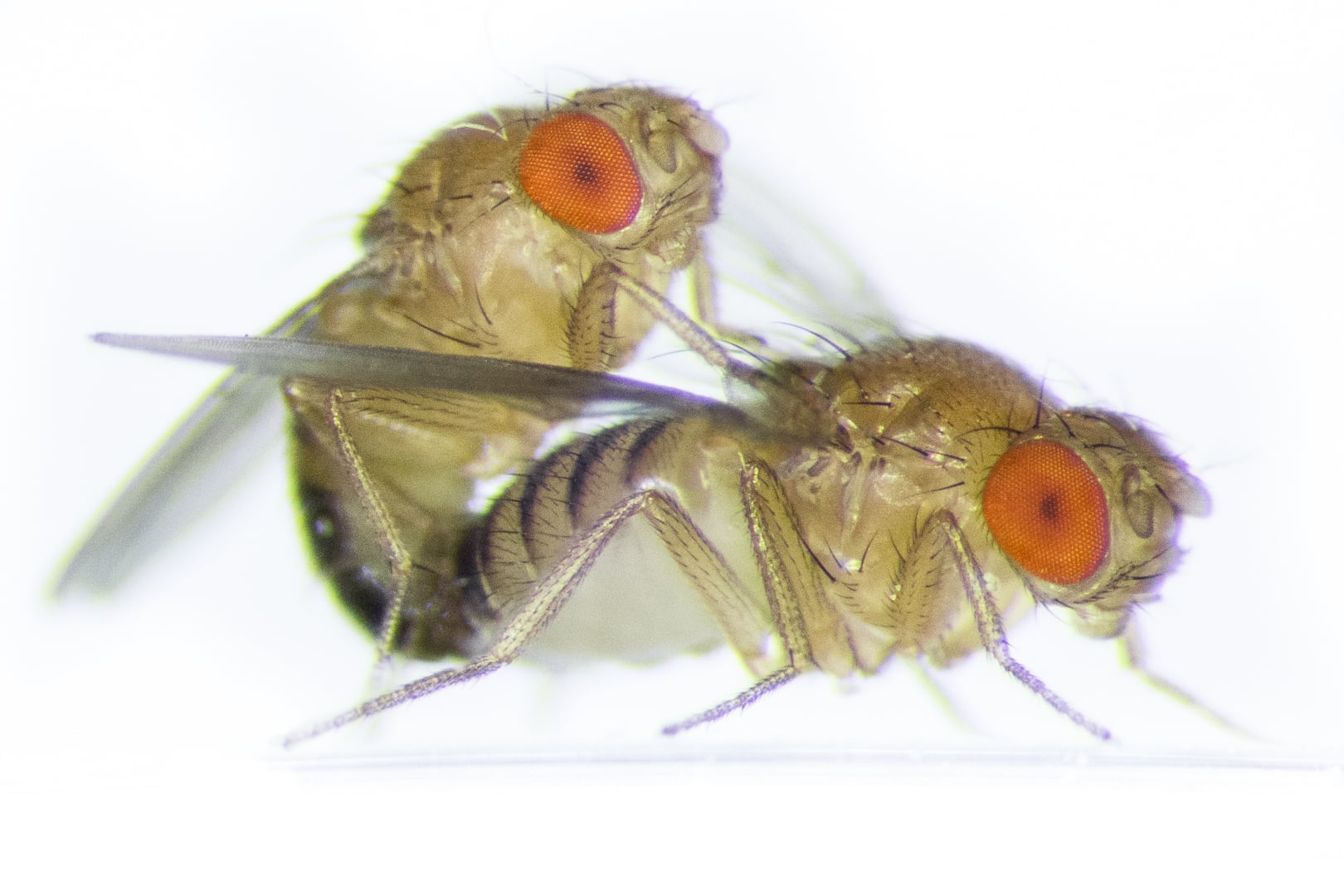
How thousands of sperm squeeze into a space 10 times smaller without getting tangled
The sperm of the fruit fly are enormous—the largest in nature relative to body size. The male Drosophila melanogaster rarely exceeds 1.8 millimeters in length. Its sperm measure the same — 1,800 microns. And it doesn’t produce just one, but thousands, which cluster in the seminal vesicle while they wait to encounter a female. After mating, the problem falls to her. These thousands of sperm cells end up in the spermathecae and the seminal receptacle. There they remain for up to two weeks before reaching the uterus and completing this delayed fertilization. Both organs are shorter than a single sperm cell. So how do flies keep them from getting tangled up? A theory first proposed in the 1970s — one that helped underpin the plastic age — has provided the answer.